
In Loving Memory
Mrs. Mildred Foster Shannon
Faithful Chapter Member · October 2, 2026
Funeral arrangements and scholarship donation information
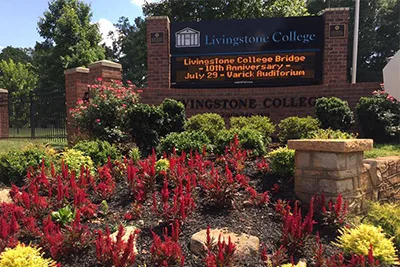
Livingstone College
Atlanta Metro
Alumni Chapter

Atlanta Metro Alumni Chapter aims to uphold the standards
of Livingstone College and the vision it promotes, thus
ensuring a strong legacy for the future.

TENACITY
EDUCATION

LEADERSHIP
COMMUNITY
News & Updates
History of Livingstone College
Livingstone College and Hood Theological Seminary were originally founded as Zion Wesley Institute by a group of A.M.E. Zion ministers for the purpose of training ministers in the Cabarrus County town of Concord, North Carolina in 1879. After three brief sessions, directed by principals Bishop C. R. Harris and Professor A.S. Richardson, the Institute ultimately closed in Concord. In 1881, Dr. Joseph Charles Price and Bishop J. W. Hood changed their roles as delegates to the Ecumenical Conference and became fund-raisers with the mission to re-establish Zion Wesley Institute. The Rowan County town of Salisbury, just 20 miles northeast of Concord, gave the Trustees a generous donation of $1,000 and an invitation to relocate the school in Salisbury.
They accepted both gifts, and the College re-opened in Salisbury in 1882 with Dr. Price as President. The new site was J. M. Gray’s farm called Delta Grove, which consisted of one building and 40 acres of land. In 1887, by an act of the legislature, the name Zion Wesley Institute was changed to Livingstone College in honor of David Livingstone, the great Christian missionary, philanthropist, and explorer. Since its inception, the College has had two principals and eighteen presidents, including two acting and six interim presidents. Among its possessions, the College owns 272 acres of land and the physical plant that currently consists of twenty-one brick buildings, seven of which are listed in the National Register of Historic Places.
Upcoming Events
National HBCU Alumni Alliance RunWalk 5K
June 27, 2026
LEARN MORE
